
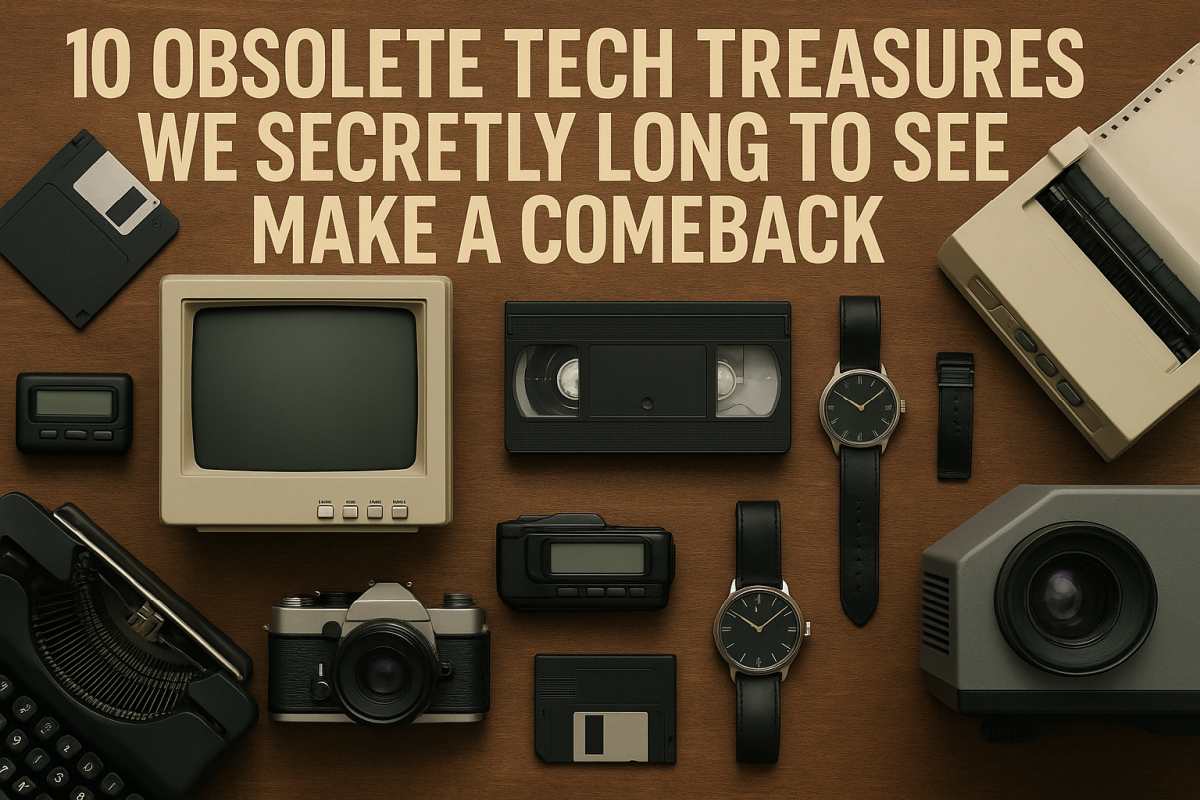
Editor’s note: We used AI to create some of this article content and the headline image above, mostly because the guy who creates all the blog content was offline a lot this last month. This was then edited because some of the verbiage didn’t make sense, and we have no idea why there is a random watch strap and malformed floppy in the image above. AI is cool, but always check its work.
There’s something undeniably romantic about technologies that have slipped into obsolescence. These are tools we grew up with, bonded over, and then watched quietly vanish. Though their replacements are sleeker, faster, and more versatile, these bygone inventions left behind that rare spark of tactile magic and deliberate intent. In the spirit of the recently-passed Memorial Day, here are ten “dead” technologies we secretly wish were still humming along.
- Floppy Disks: Remember the satisfying click of a 3.5-inch floppy sliding into its drive? With a mere 1.44 MB of capacity, floppies forced you to carefully curate every byte. Today’s local and cloud storage is convenient, but it lacks that moment of intentionality: you had to decide whether the file stays or file goes. The floppy’s snug plastic shell and mechanical write-protect tab offered a tangible connection between you and your data.
- CRT Monitors: Cathode-ray tube screens may have been bulky and power-hungry, but their deep blacks, true-to-life colors, and instantaneous pixel response remain unmatched. Gamers still lament the ghosting and input lag of modern LCDs compared to the crisp precision of a CRT (which is also why they’re heavily sought after by retro gamers – which makes them super overpriced on the used market). Who can resist the gentle curve of the glass, the soft hum of the electron gun, or the way images seemed to float inside the tube?
- VCRs & VHS Tapes: The ritual of renting a tape, fumbling with rewind, and returning the tape before a late-fee penalty was pure experiential theater. DVD menus and streaming autoplay have their perks, but they lack the tactile suspense of “Be kind, rewind” and the thrill of hunting down a forgotten box set at the back of the shelf. We still wish you could get a VHS tape at our local BlockBuster.
- Pagers (Beepers): Before everyone lived inside their smartphones, pagers offered a quiet, focused line of communication. They were one-way messages that demanded a callback and genuine conversation. There was something gratifying about receiving a single beep and letting it sit until you could respond, rather than the constant ping of group chats and social feeds.
- Mechanical Typewriters: Each keystroke buckled a ribbon, drove a typebar, and imprinted ink onto paper. Errors required white-out or starting anew, so writers learned precision and patience. Modern keyboards may be quitter (even if they are mechanical keyboards) and forgiving, but they can’t match the rhythmic poetry of typebars striking paper and the fresh-ink scent of each page.
- Film Cameras & Darkrooms: Digital photography turned every snapshot into a disposable file, but film demanded thought: choosing the right film stock, composing thoughtfully, and waiting for your prints to emerge in the red glow of a darkroom. The grain, the color shift, the chance that a roll would come out “just right” gave each image a sense of serendipity you can’t quite replicate with a megapixel count.
- Dial-Up Modems: The iconic screech of a dial-up handshake was a love-it-or-hate-it soundtrack to early internet adventures. Though broadband’s always-on reliability is bliss, dial-up taught patience and resourcefulness. You had to learn to check email while waiting for pages to load line by line, pacing yourself as you queued downloads overnight.
- Dot-Matrix Printers: Those tick-tick-tick ribbons may have been noisy, but dot-matrix printers could produce multipart forms, carbon copies, and endless tractor-feed banners. Laughing off paper jams and running continuous streams of data, their resilience still has a cult following in certain industries.
- Analog Wristwatches (Mechanical): Before smartwatches buzzed for every notification, beautifully engineered mechanical watches celebrated the art of timekeeping itself. Gears, springs, and jewels worked in perfect harmony, and a gentle wind each morning forged a personal ritual that digital devices simply can’t match.
- Slide Projectors: Gather friends around a carousel of glass slides, advancing each frame with a click and there was a warm, communal magic to presenting of slide with friends. The soft spotlight illuminating captured memories made every family gathering feel like a curated cinematic event.
Though we’ve traded our chunky hardware for seamless software ecosystems, these ghost technologies remind us that limitations breed creativity, and physical rituals enrich our digital lives. Maybe one day a boutique maker will resurrect the CRT or reissue a limited-run pager. Until then, these items dwell in our collective nostalgia, proof that every leap forward leaves something precious behind.